
The Italian block of WHERE BLOOD RUNS — The Untold Story of Gladiators has wrapped. It is our co-production with S.D. Cinematografica of Rome. Max Serio directs. Paolo Sodi is on camera. Dr Jessica Clarke, of the Institute of Classical Studies at the University of London, leads the investigation on screen — walking the sites and putting the questions to the people who know them best.
We built the itinerary backwards. Everyone knows where this story ends: in an arena, in front of a crowd. We wanted to arrive there last, and to spend the days before it working out where the appetite came from.
Ten locations later, we have an answer. It is not the one we expected.
What we went to find out
The question underneath the whole series is simple to ask and hard to answer: why did this happen at all?
Not how the fights worked, or who won them. Why a culture that produced aqueducts, law and literature also built sixty-thousand-seat buildings for the purpose of watching people die, and kept doing it for the better part of seven hundred years — and where that idea came from in the first place.
So we went looking for the beginning.
What we learned
1. Nobody knows who started it — and that turned out to be the story
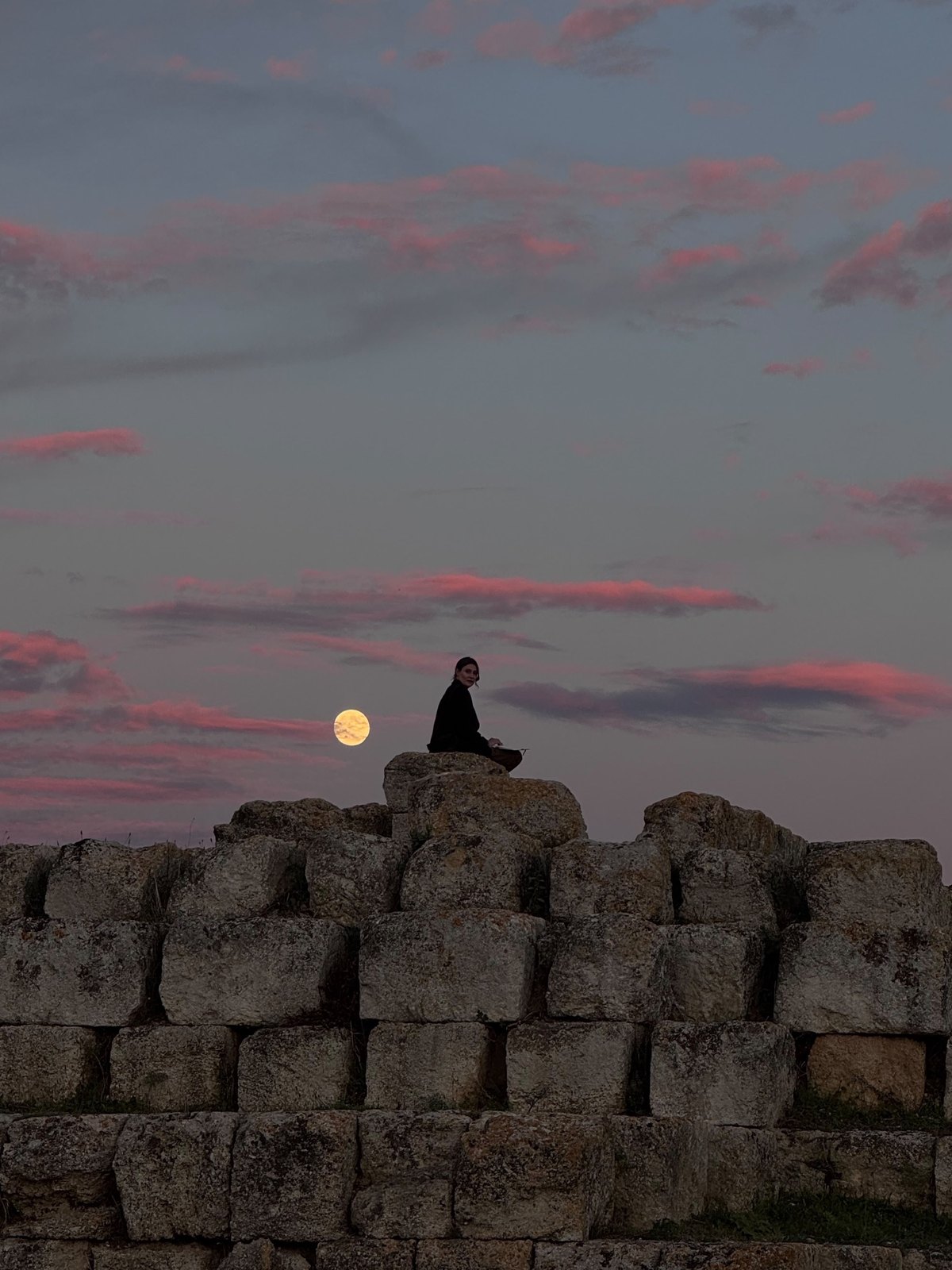
We went to Italy half-expecting to film the Etruscan answer. It is the one in the popular books: gladiatorial combat descends from Etruscan funeral rites, human sacrifice to honour a dead nobleman, inherited by Rome along with much else.
It is still a live argument, and there are at least three candidates.
The Etruscan case rests largely on the funeral context and on Rome’s general debt to Etruria. The Campanian case is Livy’s — he put the origin in Campania, around Naples — and it is supported by a substantial body of painted tomb scenes from that region showing duels and chariot races at funerals. The Samnite case is newer and has gained ground: the earliest Roman gladiator types fought in Samnite kit, with Samnite weapons, under the name Samnis.
The first gladiatorial combat recorded at Rome is 264 BC, staged by the sons of Brutus Pera to honour their father. By then the practice already existed somewhere else, and arrived fully formed.
Our itinerary, built for other reasons, ran straight across two of the three candidates — Tarquinia at one end, Campania at the other. We filmed both, and what we have is not a verdict. It is a genuinely open question with good evidence on more than one side, which is a better thing to put on screen than a tidy answer that happens to be wrong.
2. The habit arrives attached to a funeral, not to an arena
Whichever region you credit, the earliest version of this is not entertainment. It is a graveside rite.

Two days underground in the painted tombs at Tarquinia make that concrete. The paint is still on the walls after two and a half thousand years: dancers, banqueters, pipe players, wrestlers, men with weapons. People at the top of their lives, painted for the dead to look at.

And at Cerveteri, the Banditaccia necropolis is a city — junctions, kerbs, doorways, house-shaped tombs with beds carved into the rock. The Etruscans built cemeteries the way they built towns, and gave the dead addresses.
The arena comes much later. What comes first is a crowd at a grave.
3. Rome kept its drama and its blood in separate buildings, and built the blood one bigger
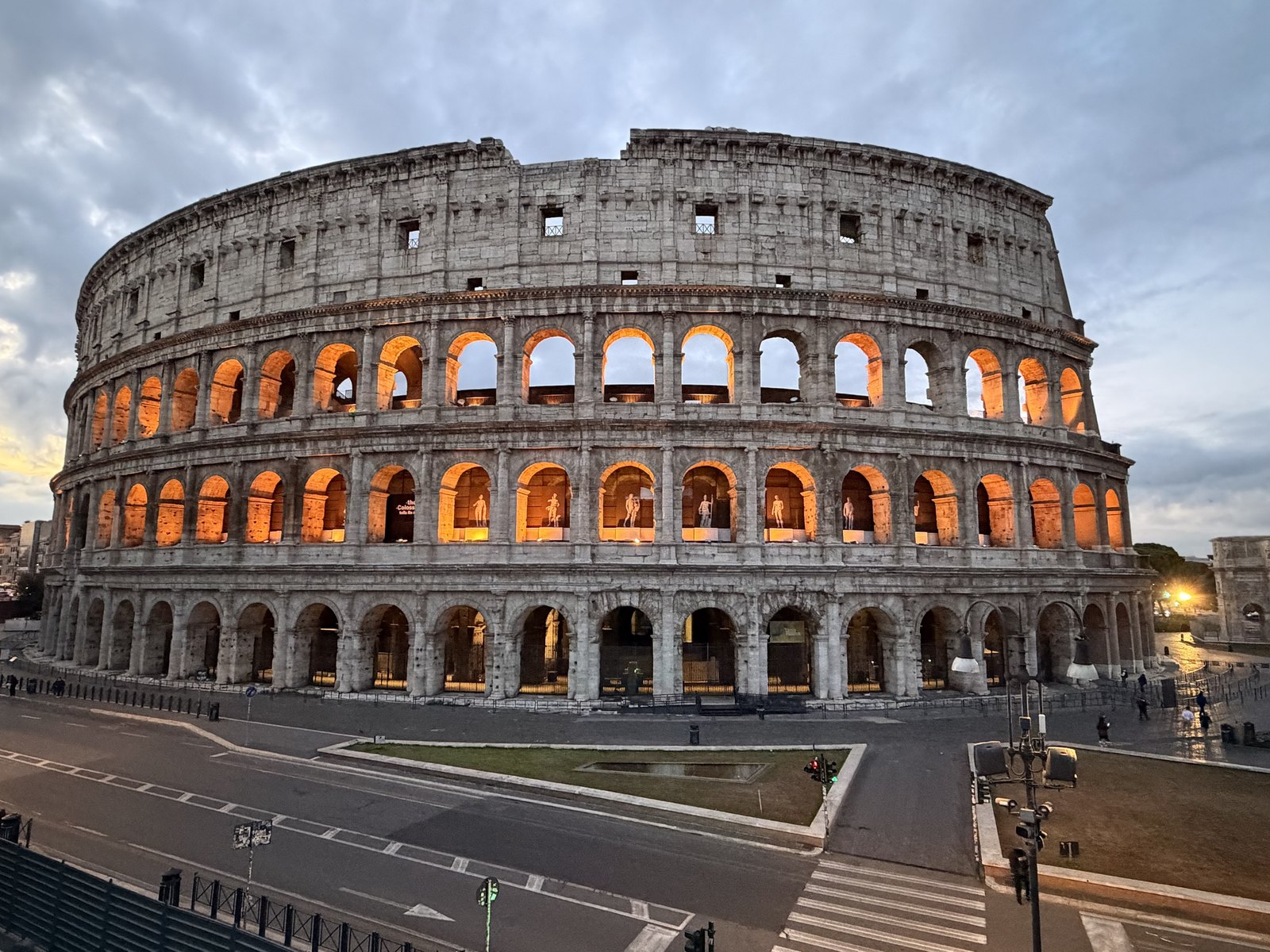
This is the single clearest thing the architecture tells you, and you can see it in an afternoon in Rome. The Colosseum and the Theatre of Marcellus sit a short walk apart. One is for plays. One is not. There is no mistaking which one Rome built bigger.
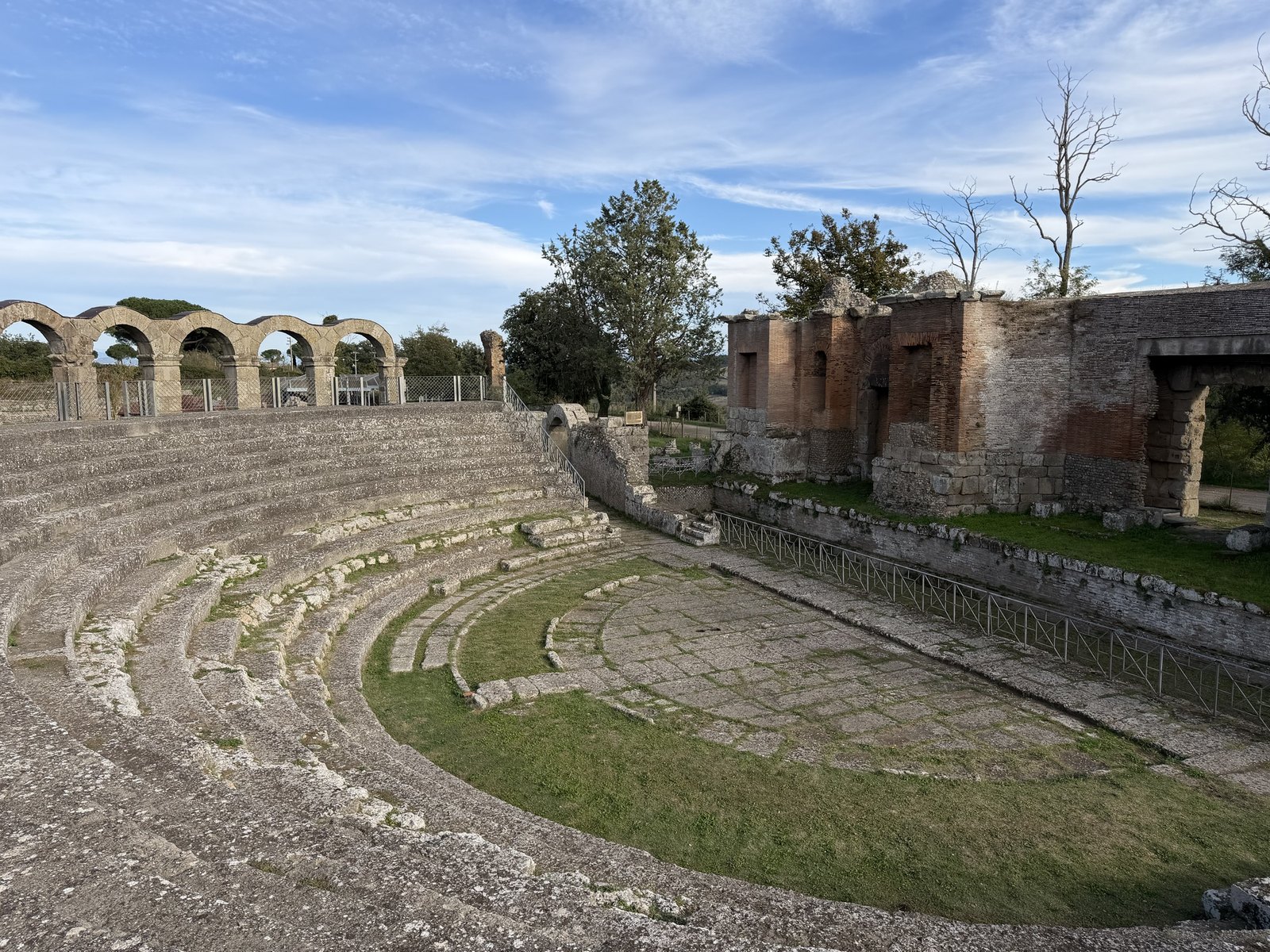
Ferento, north of Rome, is the hinge of the film: a handsome provincial theatre, built for plays, later pressed into service for something louder. The arcade is intact, and you can stand in the orchestra and work out the sightlines yourself. It is the moment the architecture changes its mind.
4. The kit was costume as much as armour
In the 1760s, diggers at Pompeii opened a colonnaded courtyard behind the theatres and found it full of armour — helmets, greaves, shoulder guards, belts. It was the gladiator barracks, buried in 79 and left where it fell. Much of it is now in Naples, and we filmed it there.
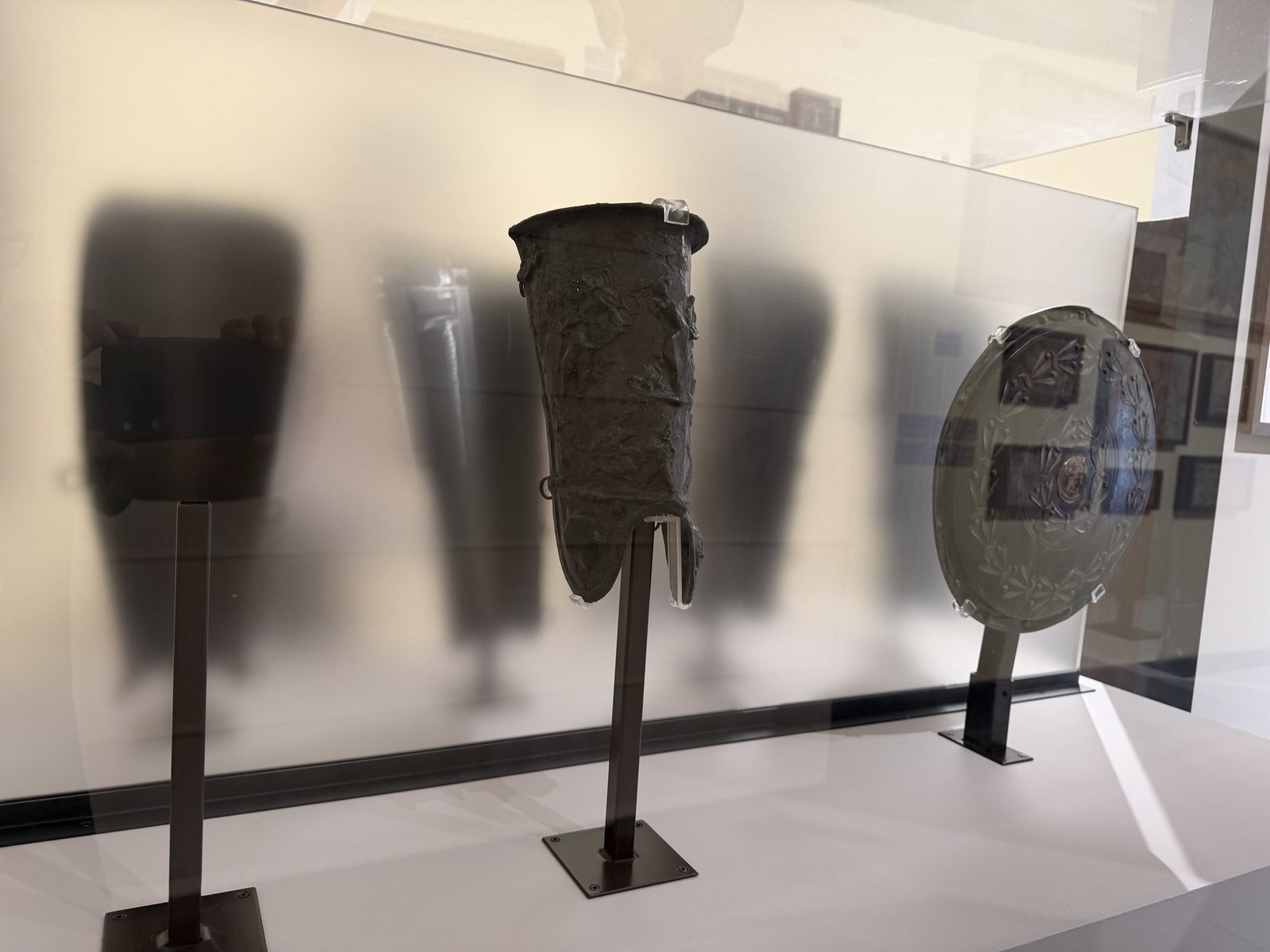
What stops you is not the weight. It is the decoration. These are not plain working pieces: the greaves are embossed edge to edge, the helmets worked all over. Somebody spent a very long time making them beautiful, for a man who would be looked at by tens of thousands of people and might not survive the afternoon.
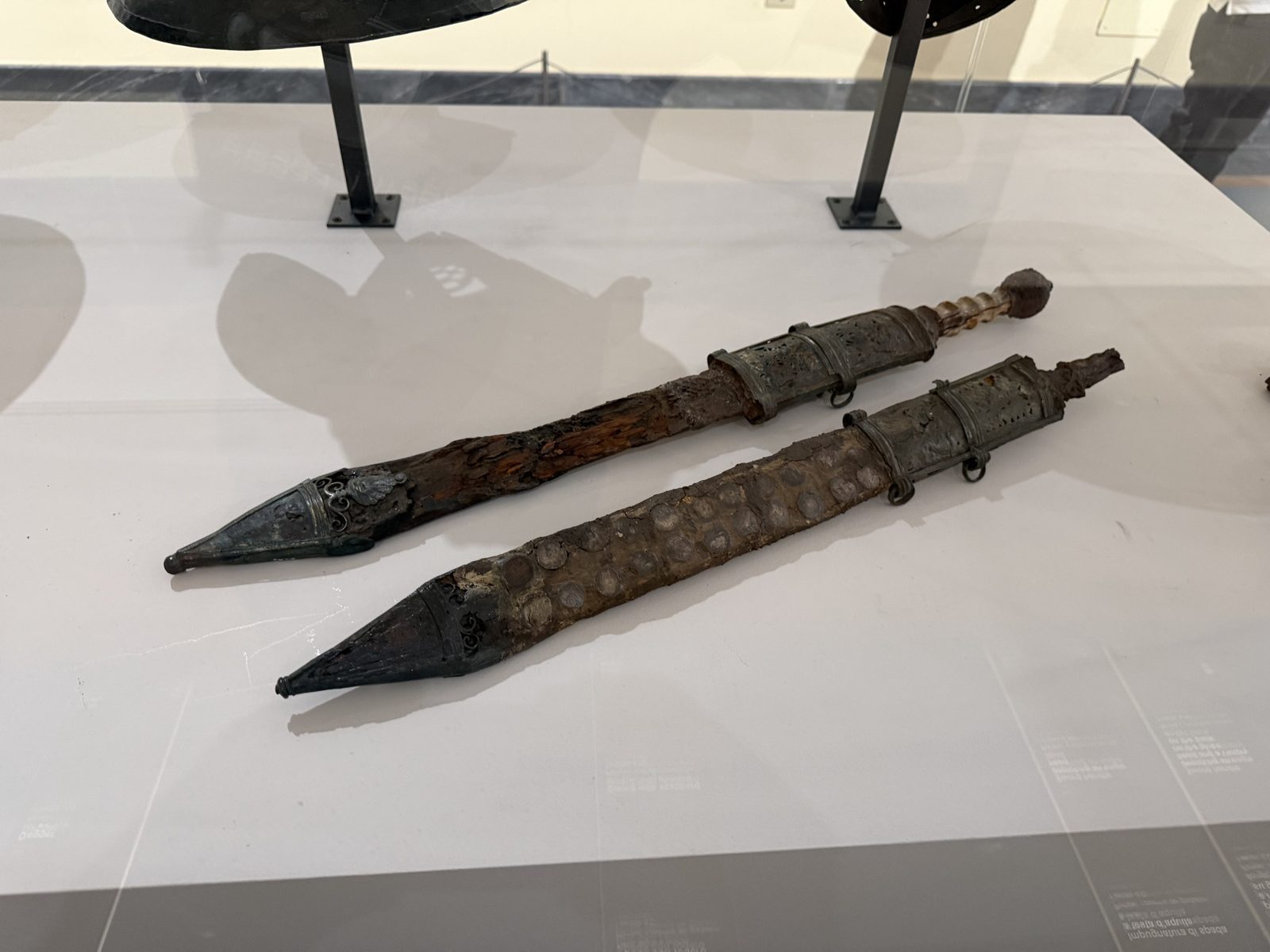
That is production design. It tells you the fights were staged, dressed and sold — closer to spectacle than to combat.
5. The machinery was industrial
The clinching evidence is underground at Capua.
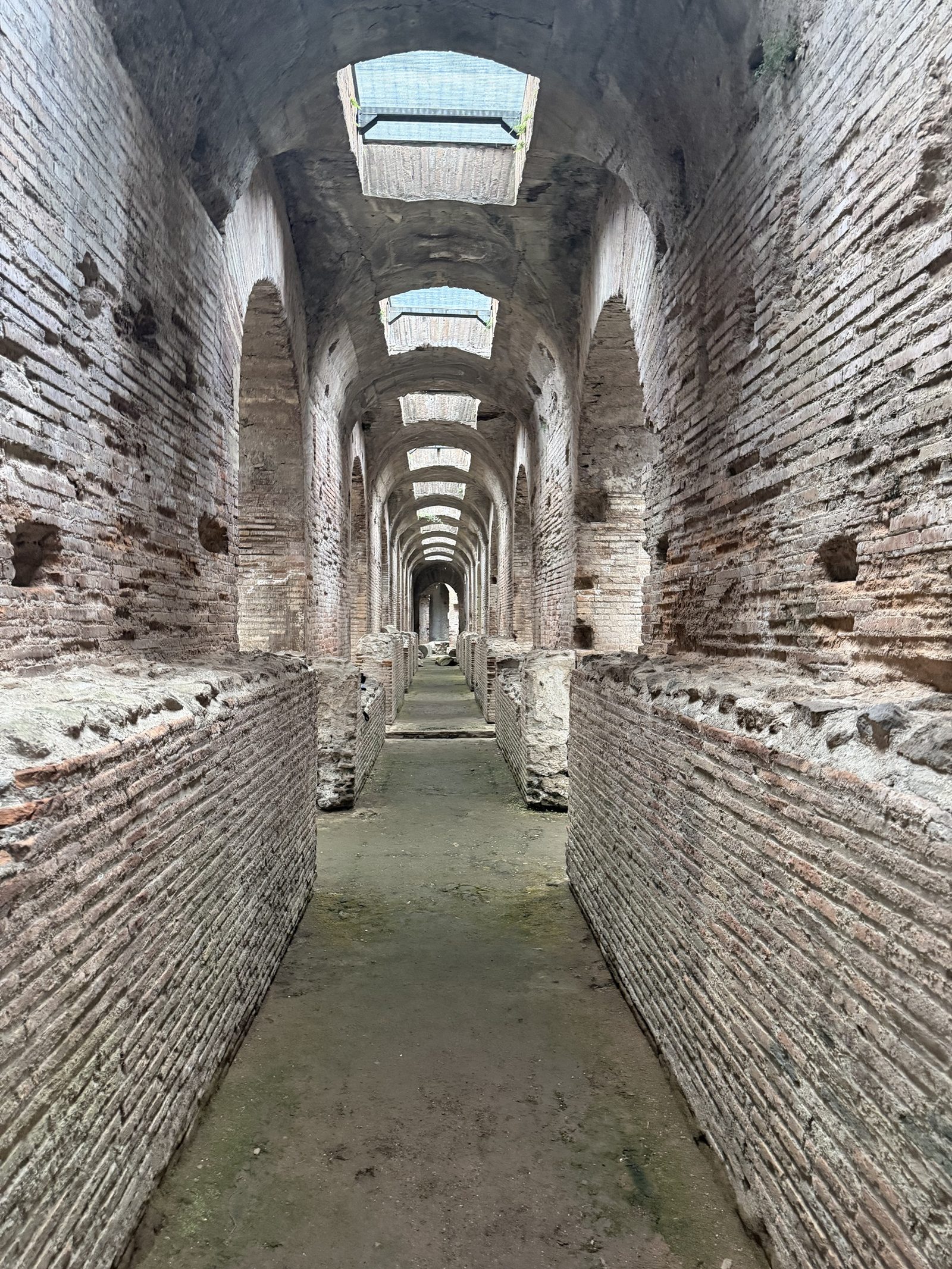
Beneath the arena floor of the Anfiteatro Campano the corridors are still standing — vaulted, running the full length of the building, lit by shafts of daylight dropping through the floor above. This was the machine room. Cages came along these passages. Lifts and counterweights brought animals and men up through trapdoors into the light, on cue.

The site has reconstructed one of the hoists in timber, and you can stand underneath it and work out exactly what it did.

We flew the drone through it — not over it, through it, the length of the underground beneath the arena floor.
You do not build that for an occasional rite. You build it for a programme, with scene changes.
6. The revolt did not end the business. Rome rebuilt, with more seats
In 73 BC something over seventy men walked out of the gladiator school at Capua, armed with kitchen equipment, and beat the first army Rome sent after them. The war that followed ran for two years and drew in an army of something like a hundred and twenty thousand.
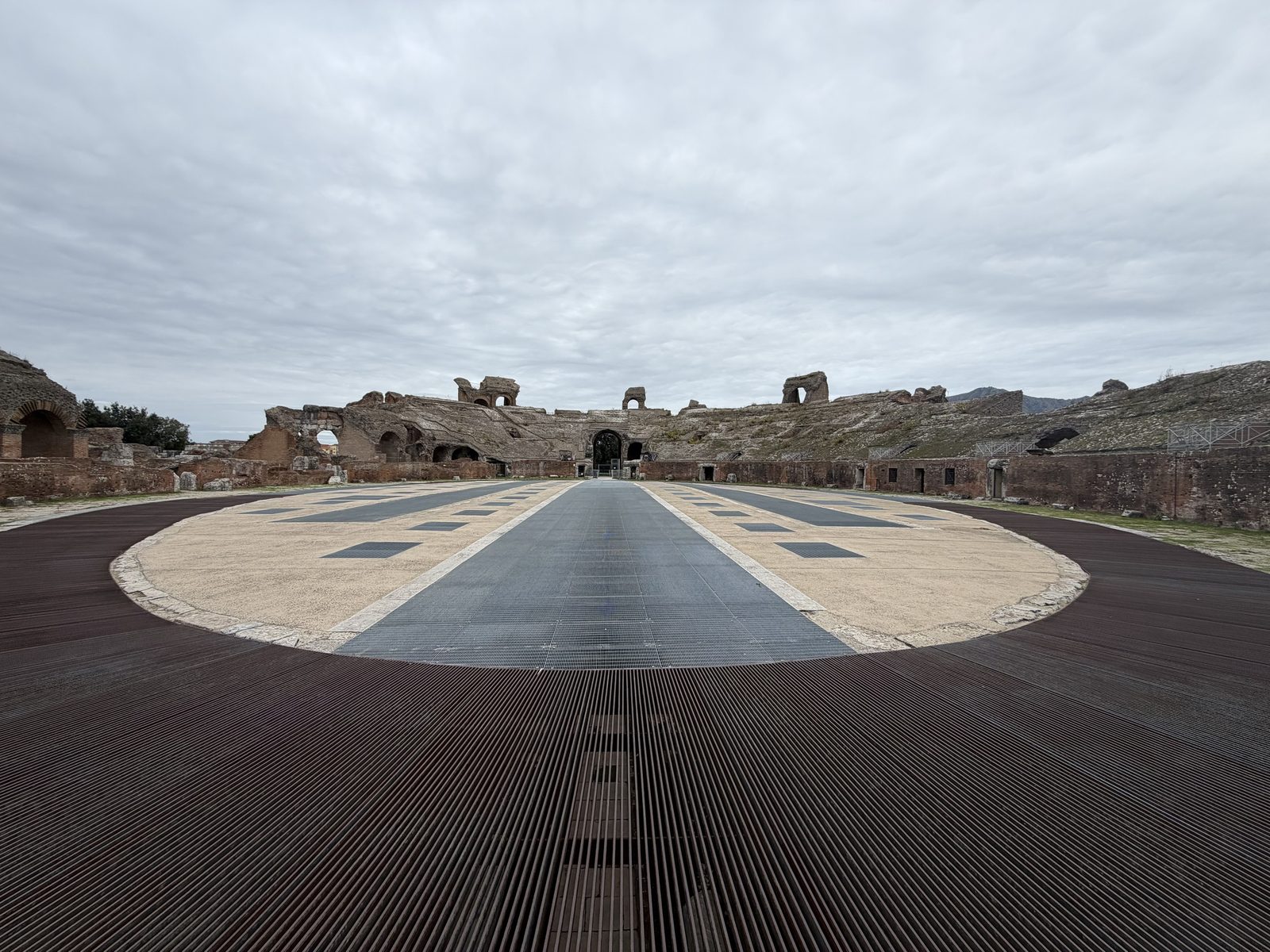
Here is the part that stayed with us. The amphitheatre you walk into at Capua today is not the one those men knew. It is a later arena, raised on the same ground, larger and better engineered — the second largest the Romans ever built, 170 metres on the long axis, four storeys, room for around sixty thousand. Only the Colosseum is bigger, and the Colosseum came afterwards.
The revolt did not put Rome off. Rome rebuilt with a bigger capacity.
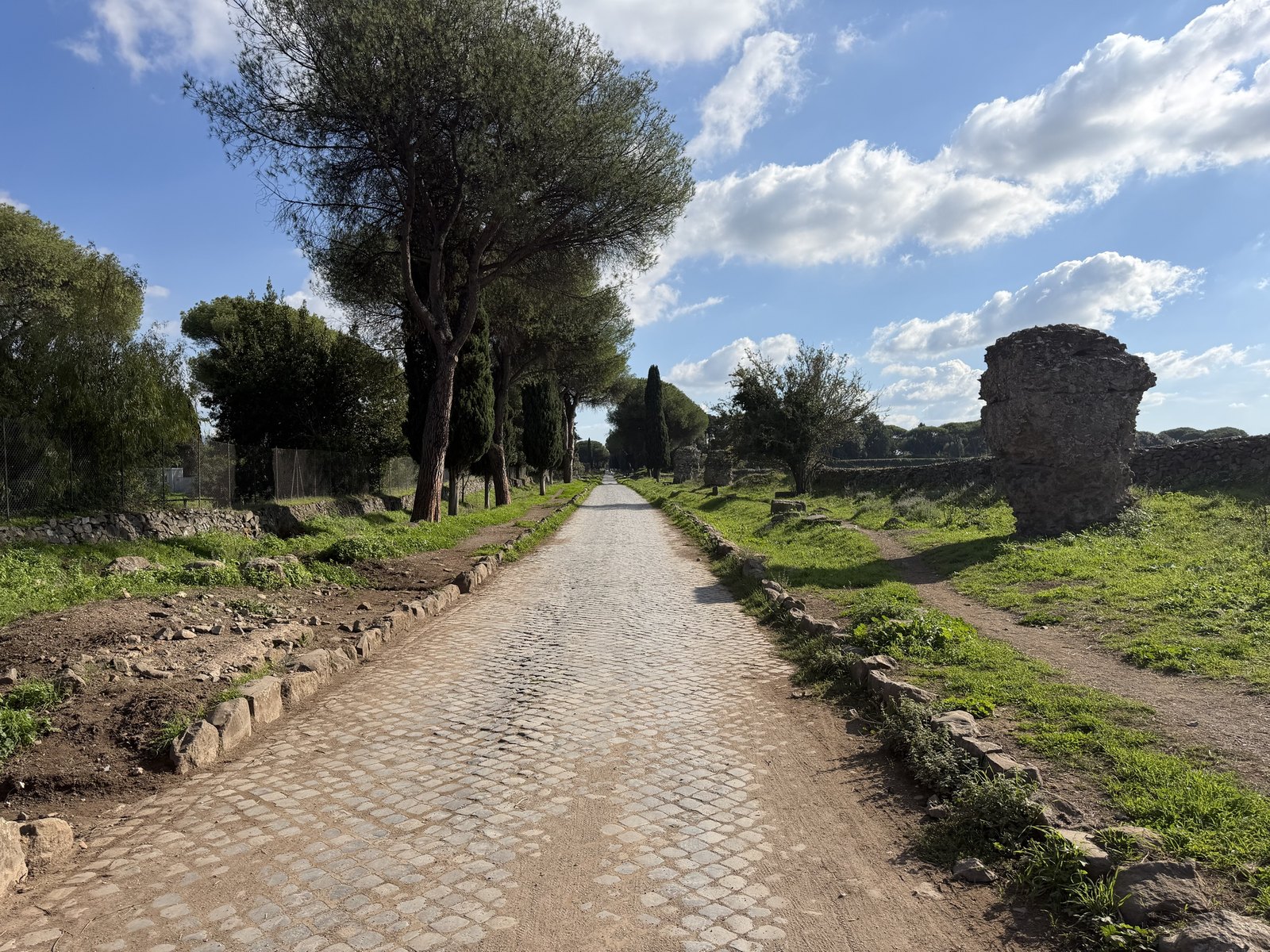
And the road makes the same point. The Appia runs dead straight from Capua towards Rome, and it is both the road along which the revolt began and the road along which it was answered: Appian puts six thousand crosses on it, roughly one every thirty metres, the whole way back. No trace of them has ever been found, which is its own kind of fact.
7. Architecture hides who paid for it. The names don’t
The last thing we learned is the reason the series exists, and we found it on a floor in the Galleria Borghese.
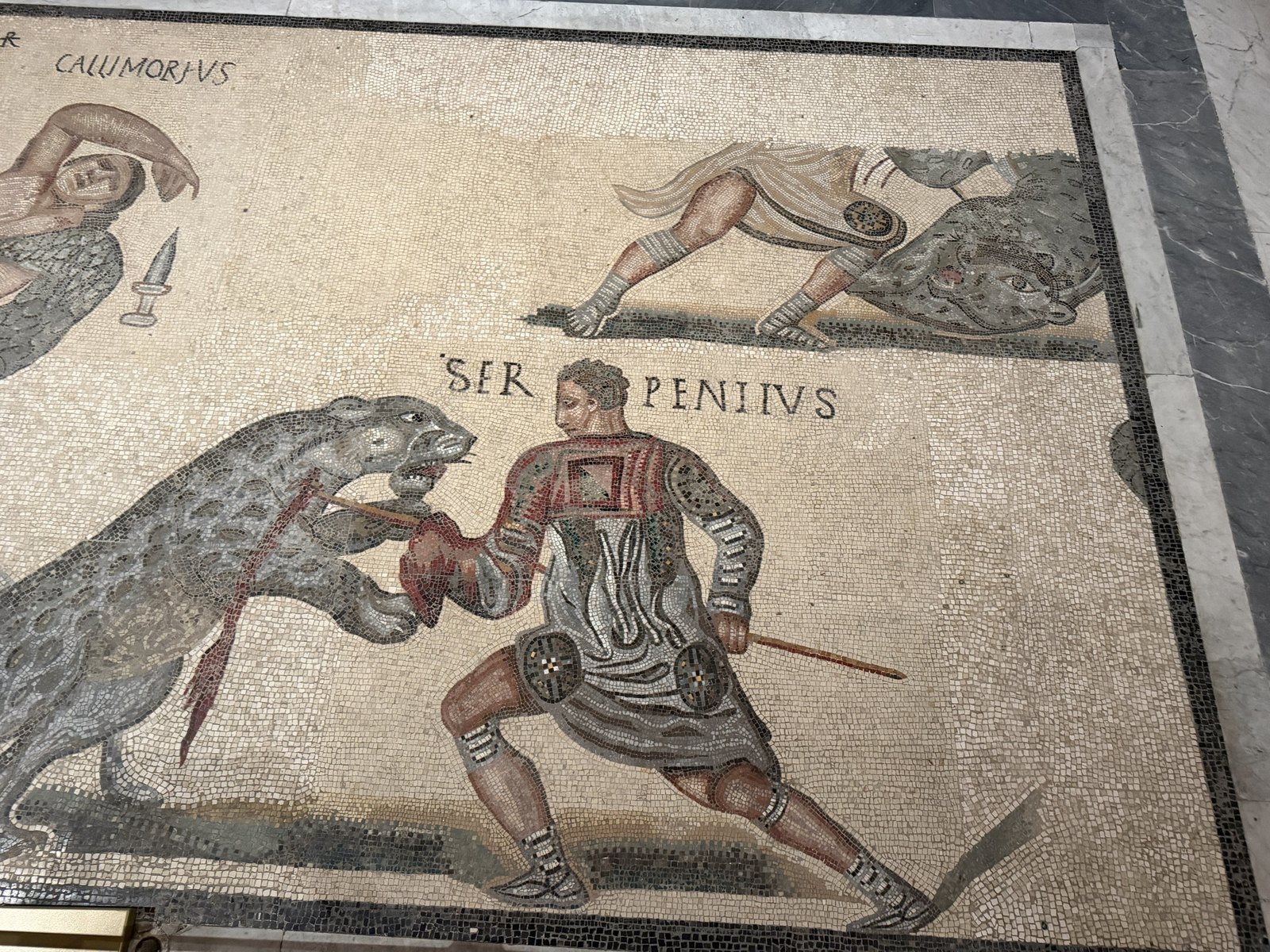
The mosaic came out of the ground in 1834 on the Borghese estate at Torrenova, along the Via Casilina, and it was laid in the first half of the fourth century. It shows gladiators and venatores at work, and beside each figure, set into the tesserae, is a name.
CALLIMORFVS. SERPENIVS. BACCIBVS. ASTACIVS.
And beside ASTIVVS — flat on his back, shield still strapped to his arm — a small circle with a line through it. Theta, for thanatos. It marks a man who died in that fight.

Everything else on this itinerary is architecture, and architecture is easy to admire: it is very good at hiding who paid for it. A tomb is a room. A theatre is a shape. An arena for sixty thousand people is an engineering achievement before it is anything else.
The floor does not permit that. It gives you the names, and then tells you which of them did not go home. Seventeen hundred years later, we are still reading them out loud.
Who we interviewed
A series like this is built on access, and the people who gave it did most of the work.
Dr Jessica Clarke, of the Institute of Classical Studies at the University of London, is the series investigator. She is on camera at every site in this film, asking the questions.
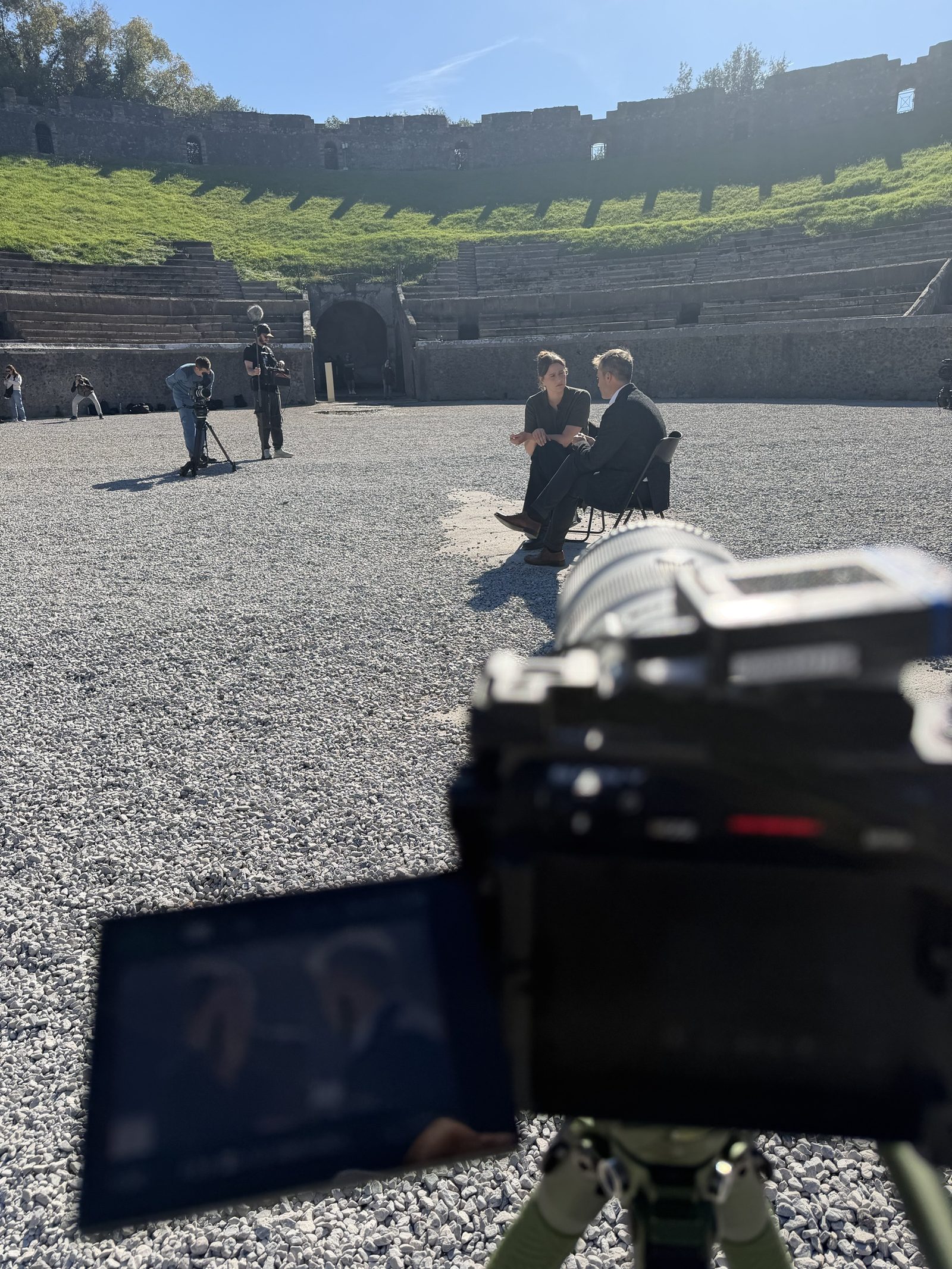
Gabriel Zuchtriegel, Director of the Archaeological Park of Pompeii, gave us an hour on camera inside the Pompeii amphitheatre — which the park closed to the public for the duration. An hour with the person who runs a place like that is rare on its own. Having the building emptied while you do it is something else.
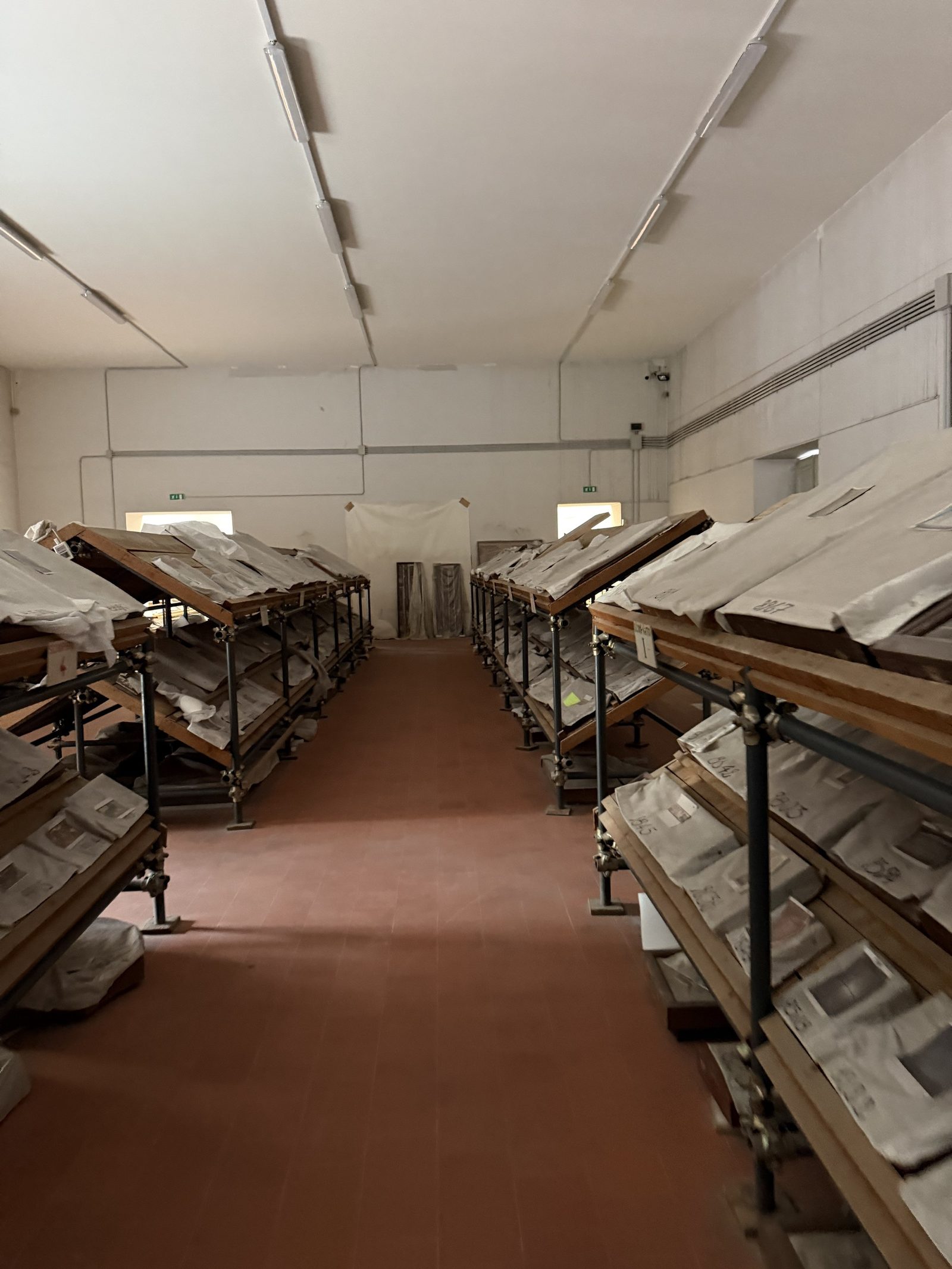
At the Museo Archeologico Nazionale di Napoli we were given an exclusive hour with the museum’s director, filmed among the armour that came out of the gladiator barracks at Pompeii. We also spent part of that day in the storerooms, which is not somewhere visitors go: rack after rack of Pompeian wall painting under dust sheets, each one numbered and waiting.
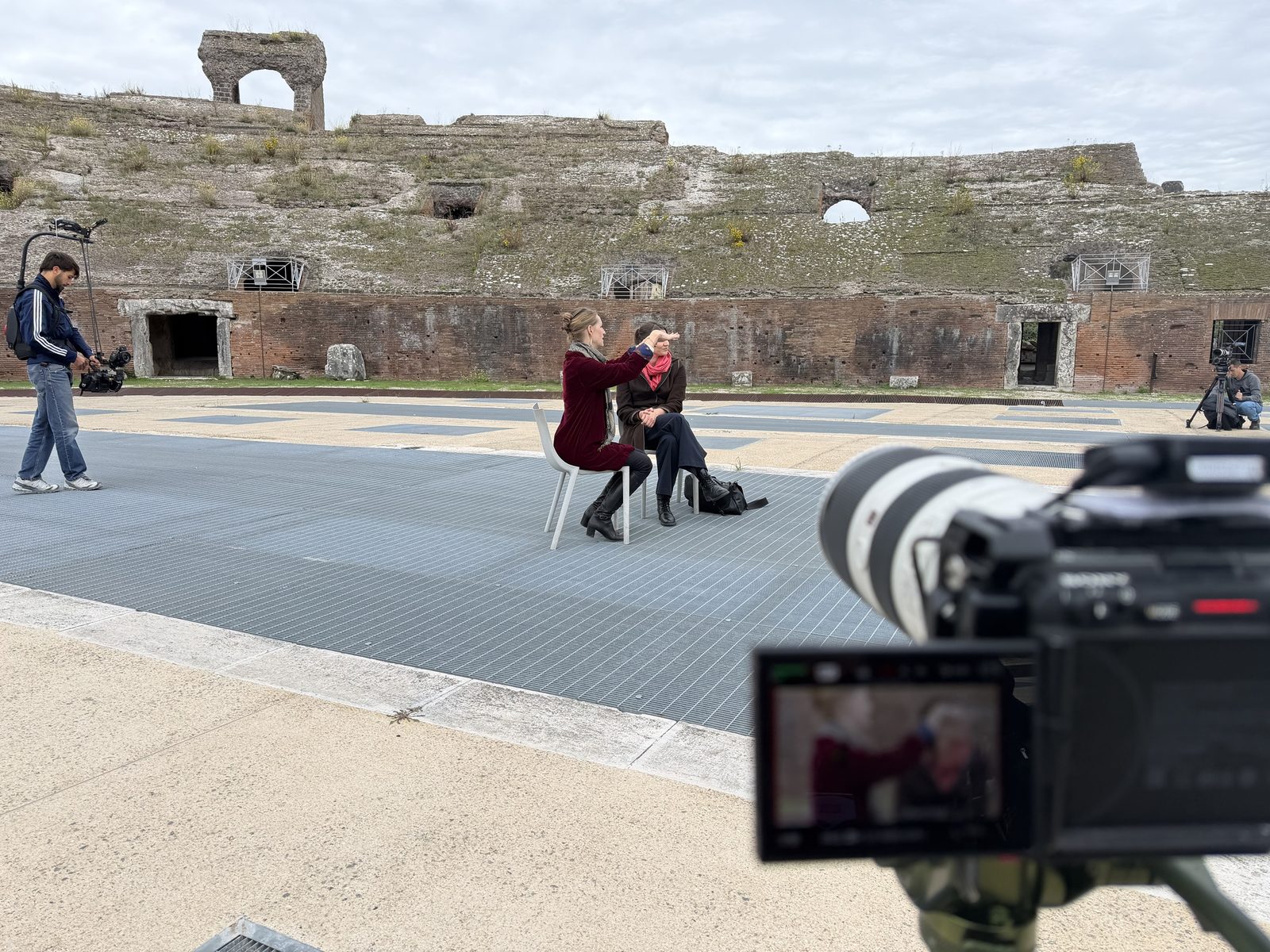
At the Anfiteatro Campano we sat down with the director of the site, in the arena standing above the underground we had just flown through. And we were walked through the Spartacus uprising and the history of Capua — the gladiator school, the war, and what the city was before and after it — by a historian who gave us the whole site, on foot, on the last day of the shoot.
Who opened the doors
None of the above happens without permission, and a surprising amount of it was given generously.
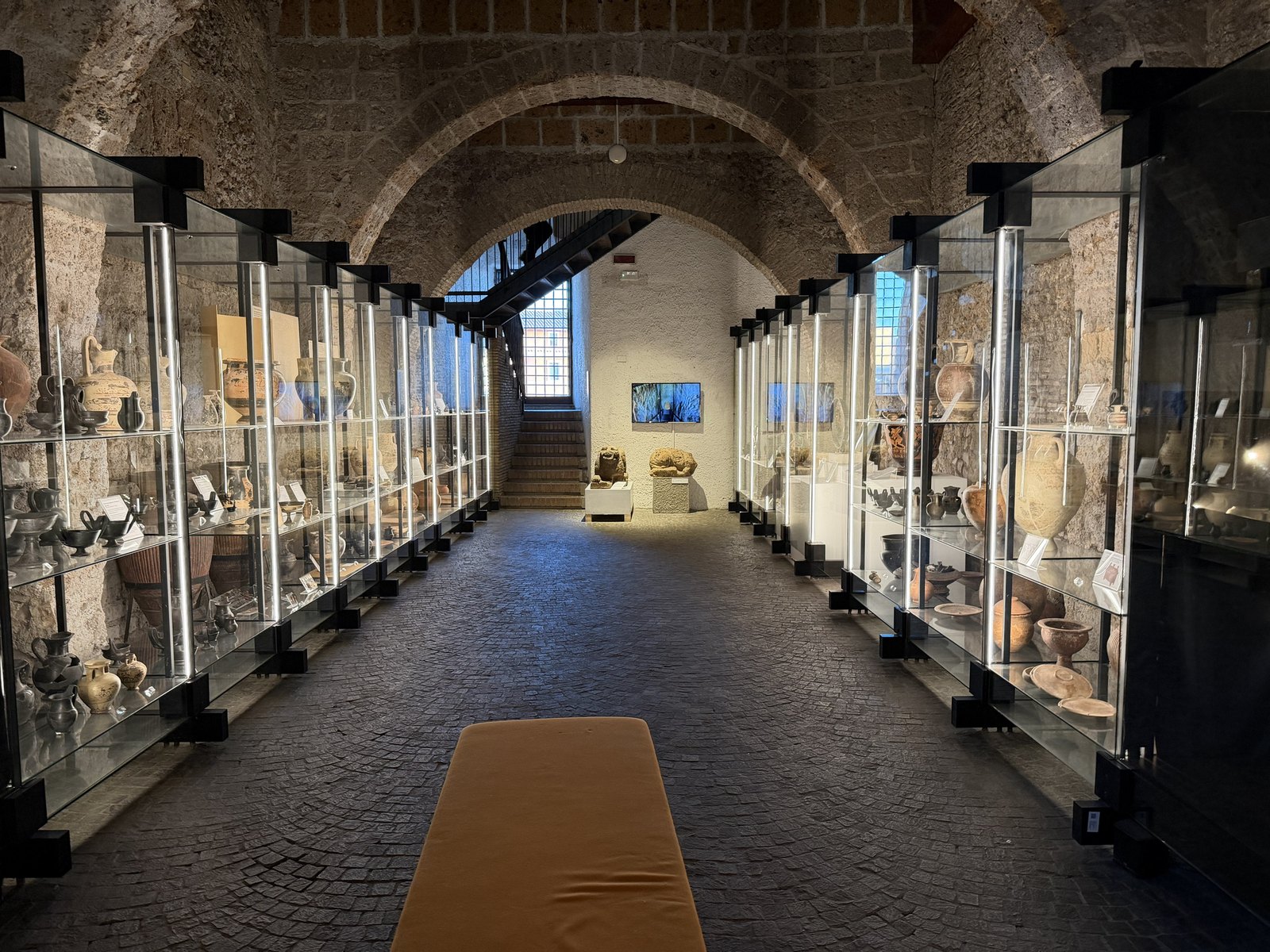
The archaeological park at Tarquinia, for access to film inside the painted tombs. The Archaeological Museum of Cerveteri, which cleared the building so we could light it properly and work without a clock running. The civic museum at Viterbo. The Museo Archeologico Nazionale di Napoli, for the galleries, the storerooms, and the hour with its director. The Archaeological Park of Pompeii, for the aerial authorisations and for closing the amphitheatre. The Anfiteatro Campano at Santa Maria Capua Vetere, for the arena and for the underground. The Galleria Borghese, for the floor.
Every aerial on this shoot was flown with authorisation. Every one.
What happens now
The material comes back to Prague and into post. There is more to come — including the reconstruction work, which is where a great deal of what we filmed in those museums stops being objects under glass and starts being people with names.
We will have more to say as that comes together.
WHERE BLOOD RUNS — The Untold Story of Gladiators is an Italian–Czech co-production between Picasso Film and S.D. Cinematografica. Directed by Max Serio. Director of photography Paolo Sodi. With Dr Jessica Clarke.